Every year around the first week of December the radio chatter in Marina Nuevo Vallarta changes. Someone coming back from a morning charter calls in a blow off Punta de Mita, then a breach off the Flamingos beachfront, and within days the whole bay knows: the humpbacks are back. The 2026–2027 whale season in Nuevo Vallarta and Puerto Vallarta is a few weeks away, and this is our guide to when they arrive, what the season looks like month by month, how whale watching works on a private charter, and why the good dates go first.
When the whales arrive in Banderas Bay
Humpback whales spend the summer feeding in the cold water off Alaska and California, then swim south to breed and calve in warm, sheltered bays. Banderas Bay — 40 km wide, deep in the middle, protected by Cabo Corrientes and Punta de Mita — is one of the most important of those bays on the whole Mexican Pacific. The first animals show up in late November, the numbers build through December, the bay is full from January into February (this is when you see the most mothers with calves), and by late March most of them are heading north again, with stragglers into April.
The official whale-watching season is set each year by the environmental authority under the Mexican standard for whale watching (NOM-131), and in Banderas Bay it normally runs from the second week of December to the third week of March. Outside those dates boats are not supposed to approach whales on purpose; inside them, only permitted vessels may, and there are rules about distance, speed and how many boats can be near one animal. Our captains work inside those rules — it is why the whales keep coming back.
Whale season 2026–2027, month by month
- Late November: first sightings, usually far out toward the Marietas and Punta de Mita. Fishing is excellent. If you are on a charter now, keep your eyes on the horizon.
- December: the season opens. Sightings become daily; the Christmas and New Year weeks are the first crunch for boat availability.
- January: peak numbers. Breaching, tail-slapping, the "heat runs" of several males chasing one female. Calm mornings, cool air, the best all-round month.
- February: mothers and calves close to shore, often right off the Nuevo Vallarta beachfront. Sea is flat, visibility for snorkeling is excellent, and yellowfin tuna are running at Corbeteña — the classic fish-plus-whales month.
- Early to mid-March: still plenty of animals, fewer boats, warmer water. The last two weeks of the official season are underrated.
- April: the odd late whale, but the season is over. Time for sailfish.
How whale watching works on a private charter
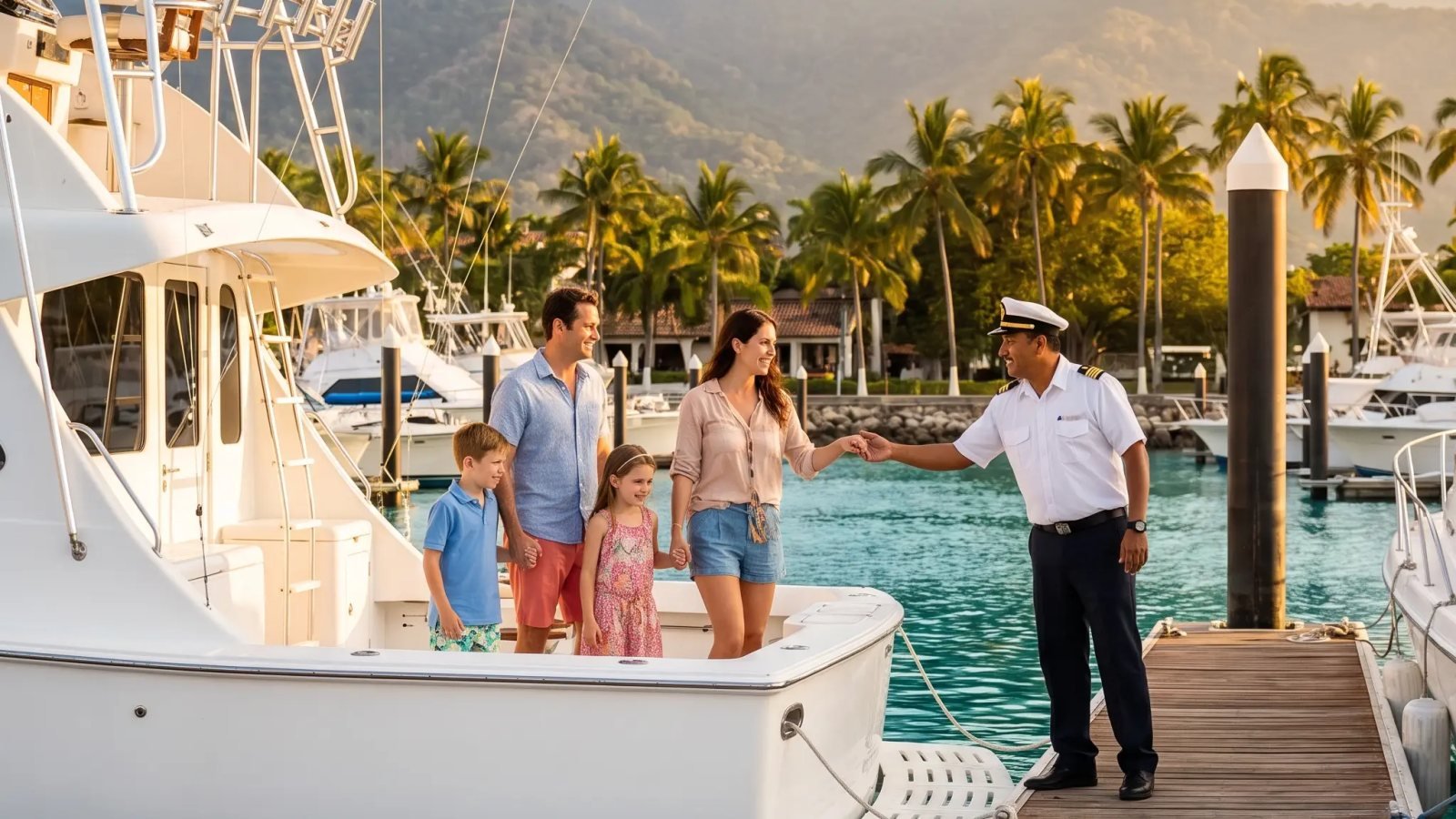
We do not run a whale-watching "tour" with a fixed route and a stranger's elbow in your ribs. What we run is private whale watching in Nuevo Vallarta and Puerto Vallarta on your own boat, with your own captain, folded into whatever else you want to do that day. In practice that means a winter charter looks like this: you leave the marina at 8:00 or 9:00 a.m., the captain heads toward wherever the whales were reported that morning — the mouth of the bay, the Marietas, the south shore — and when you find them, the engines go to idle and the boat stays with them at the legal distance for as long as they let you. Then the day carries on: fishing, a swim at Las Ánimas, snorkeling at Los Arcos, lunch on a beach. Whales are the highlight, not the whole itinerary.
Why private matters in whale season specifically: a shared boat has to move on when its schedule says so. Yours does not. If a mother and calf are rolling next to the boat at 11:40, nobody is going to announce that it is time to go back for the 12:00 group.
Which boat for whale season
All three boats see whales; they suit different groups.
- Peaceful Easy Feeling (32' super panga, 8 guests, $4,000 MXN/hour): low to the water and fast. The most intimate way to watch whales — you are at eye level with them — and the quickest to reach a sighting on the other side of the bay.
- Guanatuna (34' Gulfstream, 15 guests, $3,200 MXN/hour, 5 hours for the price of 4): the family boat. Shade, a proper head, a flybridge for spotting, and the promo makes a five-hour whales-and-beach day the best value on the bay.
- Steel n Time (53' Hatteras, 22 guests, $7,000 MXN/hour): for big groups, office parties and anyone who wants to watch whales from a high, stable deck with a cabin to retreat to. The flybridge on a Hatteras is the best whale-spotting platform in the marina.
Four-hour minimum, departures from 7:00 a.m. to 7:00 p.m., 30 % deposit by card to hold your date.
Where the whales are: the four corners of the bay
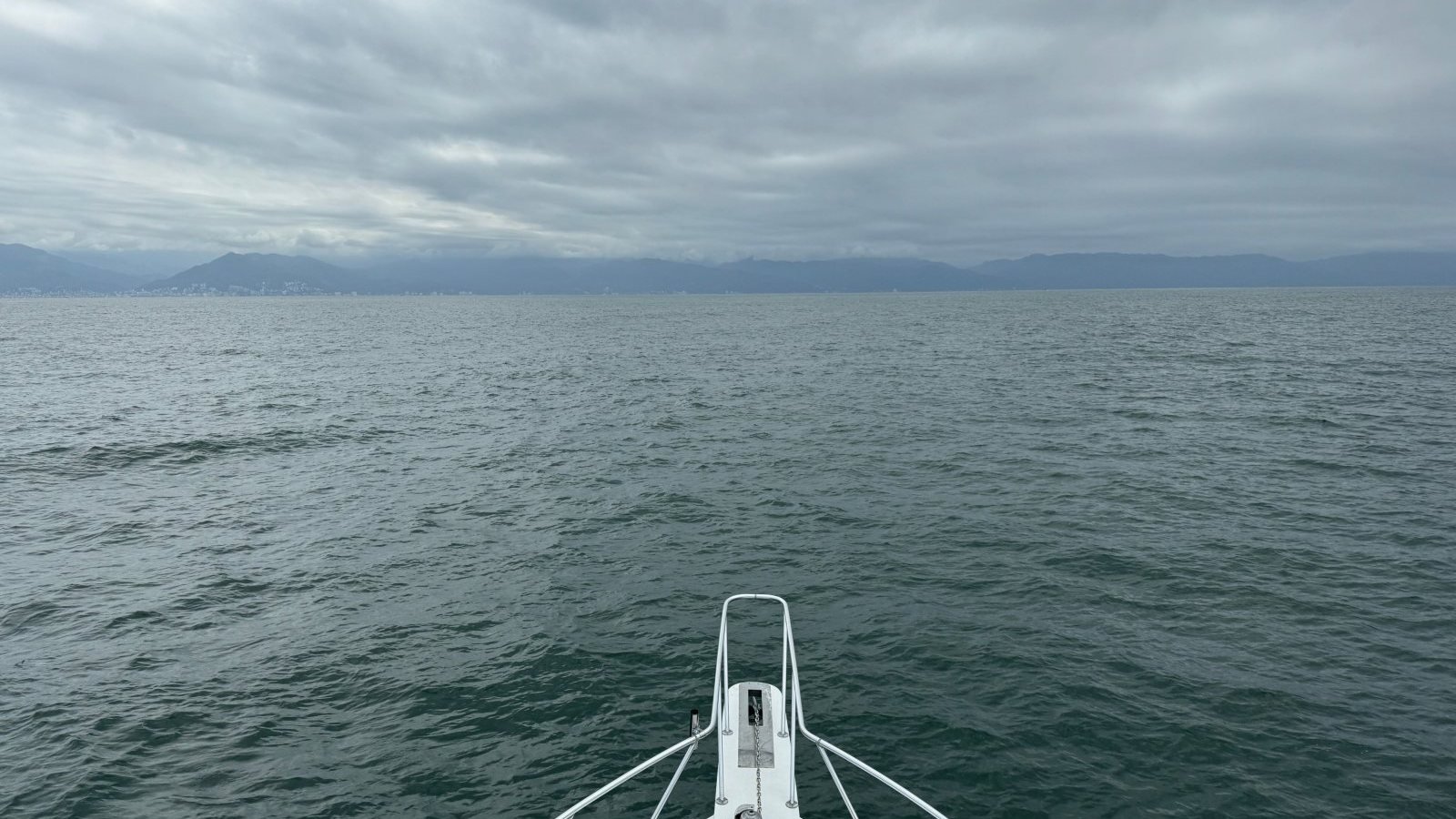
Banderas Bay is big, and knowing where to look is most of the job. These are the areas our captains work through the season:
- Punta de Mita and the Marietas Islands: the north entrance of the bay, 30–40 minutes from the marina. The first whales of the season are usually here, and the deep water off the islands holds the big groups of males in January. Pair it with a stop at Punta Mita or La Lancha on the way back.
- The mouth of the bay: the line between Punta de Mita and Cabo Corrientes, where the bay drops off. Adults cruising, heat runs, and — for the fishing side of the trip — where the winter tuna and the last sailfish are.
- The south shore: from Los Arcos past Las Ánimas and Majahuitas toward Yelapa. Calm, deep water close to the cliffs; mothers and calves like it, and it is the natural whales-then-beach itinerary.
- Off Nuevo Vallarta and Bucerías: yes, right in front of the hotels. In February, calves are often within a kilometre of the beach, ten minutes out of the marina. Some of our shortest charters have had the best encounters.
What you will see (and hear)
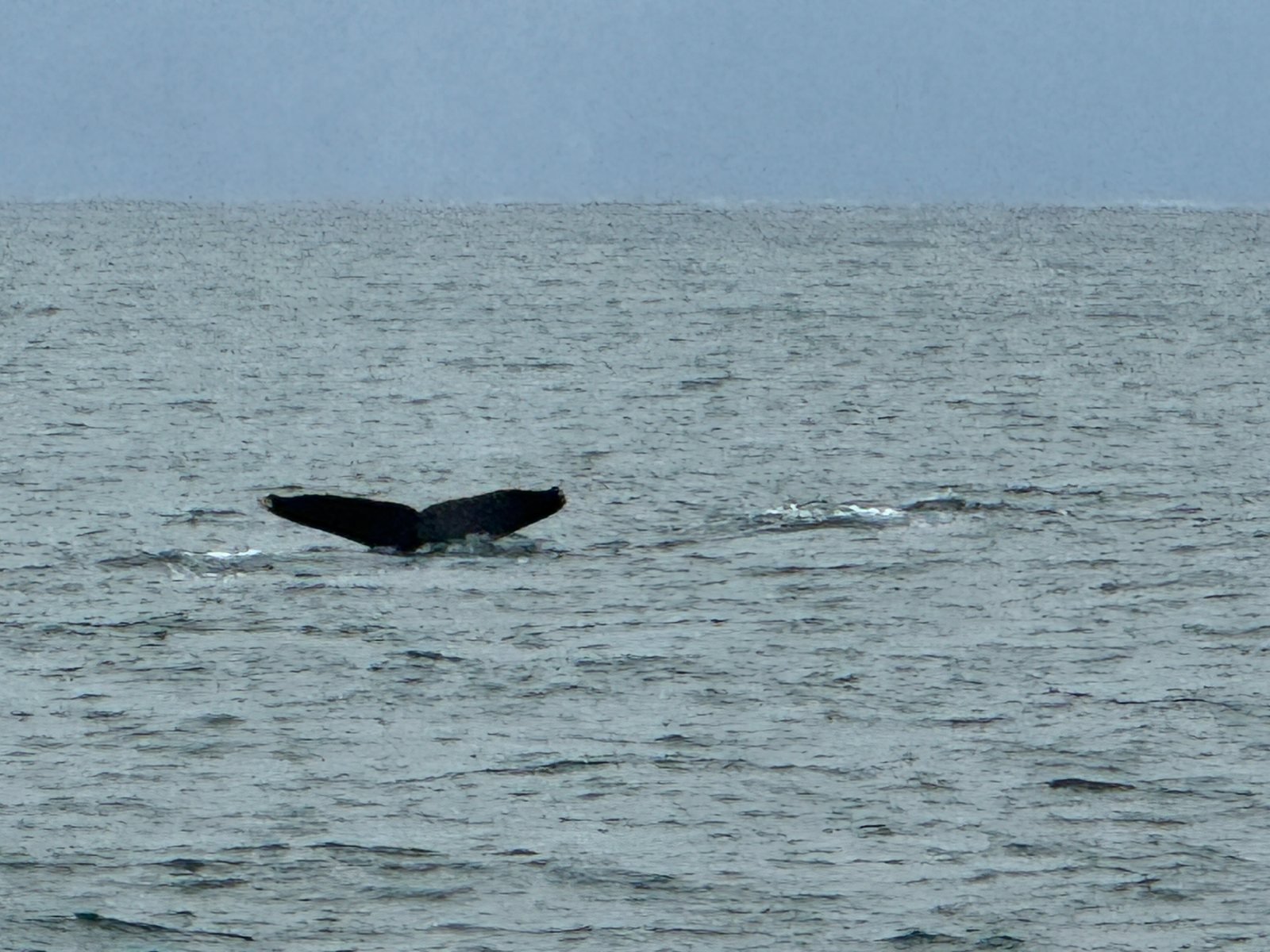
A humpback is 15 metres and 30 tonnes of animal, and it does a lot more than surface and breathe. Over a season on the bay you will see the blow (the tall puff of spray that gives them away from a kilometre), the tail fluke raised before a deep dive, pec slaps and tail slaps that sound like gunshots across the water, the spy hop where the whale rises vertically to look at the boat, and — the one everybody wants — the full breach, the whole body clearing the water. In January the heat runs are the drama: four or five males charging after one female at speed, bumping and trumpeting. And if the engines are off and the sea is quiet, you can sometimes hear the males singing through the hull; it is why our captains cut the motors rather than idling when a whale is close.
Whales are not the only thing out there in winter. Expect bottlenose and spotted dolphins most days, olive ridley turtles at the surface, manta and mobula rays in the shallows off the Marietas, and, on the offshore edge, the birds working over tuna that tell the captain where to put the lines.
How we watch: the rules that keep the whales coming back
Banderas Bay is one of the few places in the world where whale watching is regulated bay-wide, and it shows in the number of animals that return every year. On our boats that translates into a few simple habits: we approach from the side and behind, never head-on; we slow to idle at the legal distance and let the whale decide whether to come closer; we never put the boat between a mother and her calf; we do not chase a whale that dives or turns away; and when there are already the maximum number of boats on a group, we go find our own. Our captains have been on this bay for decades — they know the difference between a whale that is curious and one that wants to be left alone, and they will tell you which is which.
It also means we do not sell "swim with the whales". Nobody in Banderas Bay legally can; be wary of anyone who offers it.
Three ways to build a whale-season day
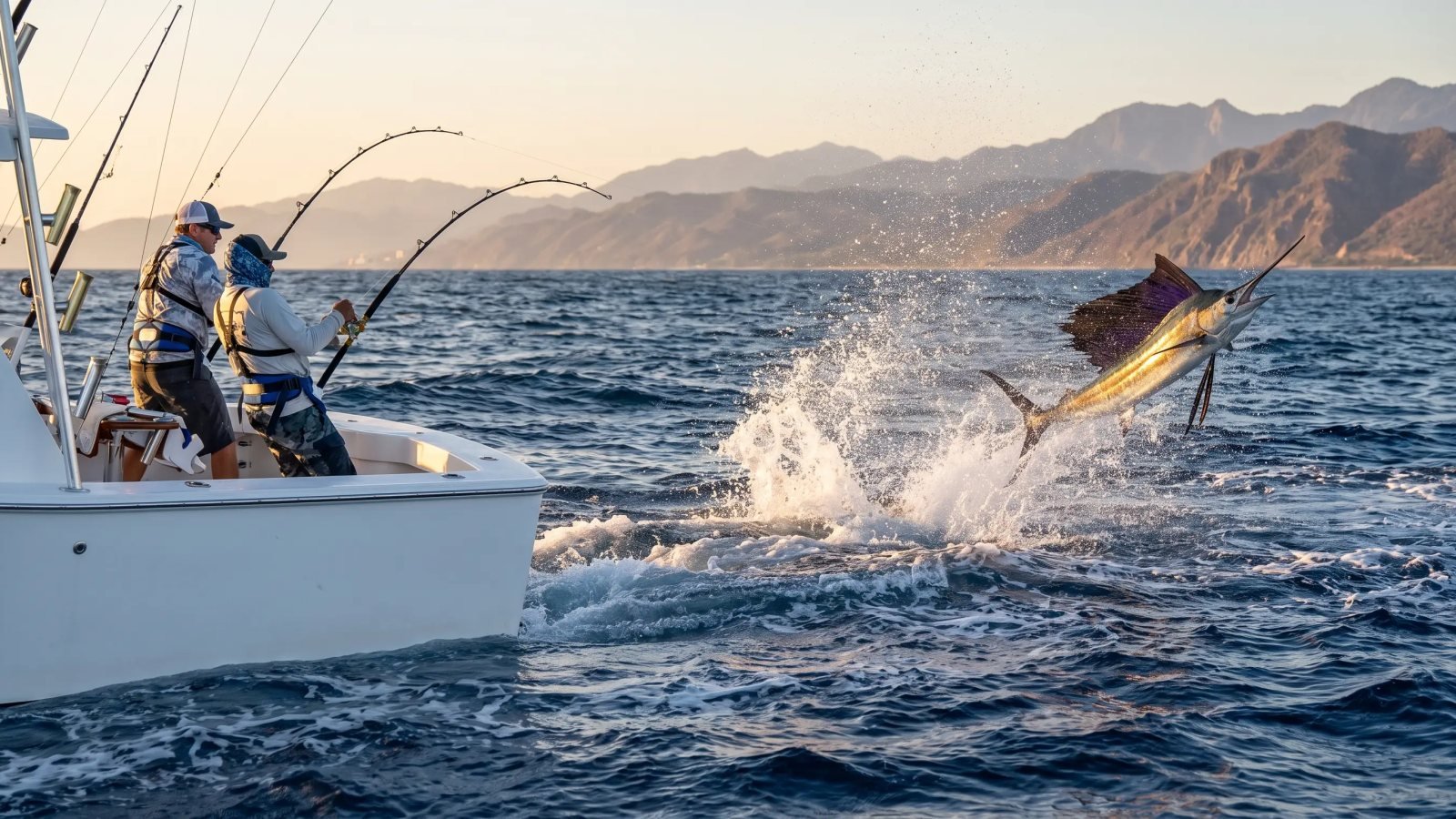
- Whales + fishing (6–8 hours): out early toward the mouth of the bay, lines in for tuna and bonito, engines off whenever a group appears, back by mid-afternoon with dinner in the cooler. The Peaceful Easy Feeling is the boat for this one.
- Whales + beach (5 hours on the Guanatuna, 4 paid): a loop along the south shore, whales on the way, an hour of snorkeling at Los Arcos, lunch on the sand at Las Ánimas, and home along the cliffs. The family day.
- Whales + sunset (4 hours, 3:00–7:00 p.m.): the afternoon light is softer, the wind usually drops after 4, and the Nuevo Vallarta hotel strip lights up behind you on the run home. Add the sunset cruise to any boat.
Whatever you build, tell us when you book that whales are the priority — it changes where the captain heads first.
Book early: the dates that go first
Whale season overlaps with high season, and both overlap with the holidays. Every year the same weeks sell out first: December 20 to January 6, the weekends of January and February, Valentine's week and the February–March spring-break weeks. If you are coming for the holidays and want a specific boat on a specific morning, book in October or November, not on arrival. Weekday mornings in mid-January and early March are the easiest to get and, honestly, often the best days on the water: fewer boats around the whales, glassy sea, cool air.
What to bring in winter
Mornings are cooler than visitors expect — 18–20 °C at 8:00 a.m. — and the run out is breezy, so bring a light jacket or windbreaker you can peel off by 10. Polarised sunglasses help you spot blows and the white flash of a pectoral fin under the surface. A camera with some zoom is worth it, but do not spend the whole encounter behind it. Reef-safe sunscreen, a hat, water, and if you are prone to seasickness, take something the night before. The crew has ice and water; food and drinks are yours to bring or ask us to arrange.
Frequently asked questions
When does whale season start in Puerto Vallarta and Nuevo Vallarta?
The first humpbacks arrive in late November; the official whale-watching season in Banderas Bay usually opens in the second week of December and closes in the third week of March. Peak numbers are in January and February.
Are you guaranteed to see whales?
No operator can promise a wild animal, but in January and February on Banderas Bay it is unusual not to see them. Because our charters are private and combined with fishing or a beach day, a quiet whale morning is still a great day on the water.
How much does a private whale watching charter cost?
The whole boat rents by the hour: $3,200 MXN (Guanatuna), $4,000 MXN (Peaceful Easy Feeling) or $7,000 MXN (Steel n Time), with a four-hour minimum. Split among a full boat it is comparable per person to a shared tour, with none of the crowd.
How close can the boat get to the whales?
Mexican regulations set minimum distances and speeds around whales, and a limit on how many boats can be near one group. Our captains keep to them; very often the whales close the distance themselves.
Can we fish and watch whales on the same trip?
Yes — it is our most popular winter charter. Lines come in when whales are near, go back out when they move on. February pairs the calves close to shore with tuna offshore.
Is whale watching good for children?
Very. A private boat lets you go at your family's pace, the Guanatuna has shade and a bathroom, and a breaching humpback is something no child forgets.
What happens if the weather is bad?
Winter is the dry season and cancellations are rare. If the port captain closes the marina for weather, we move your date or refund the deposit.