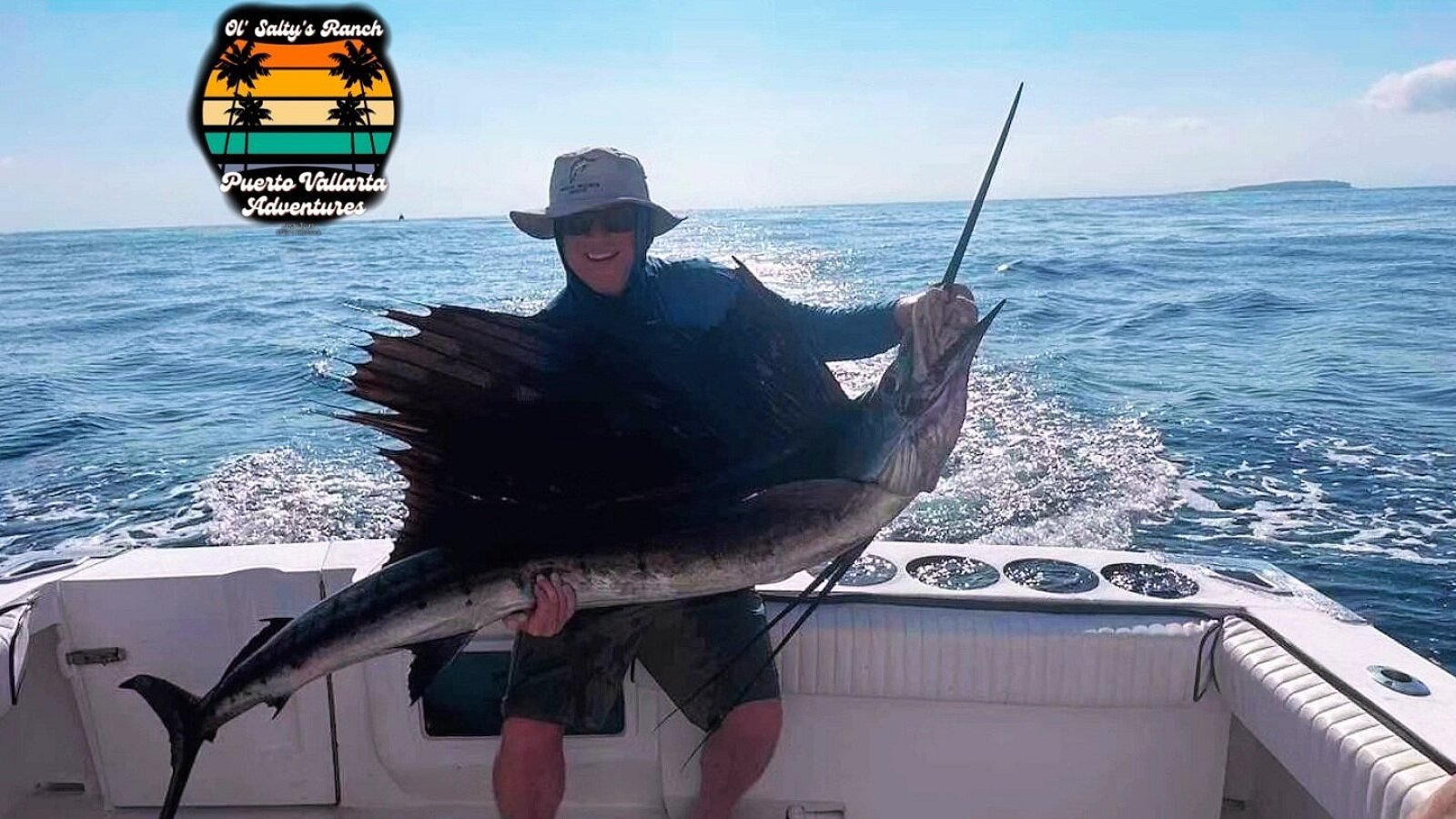
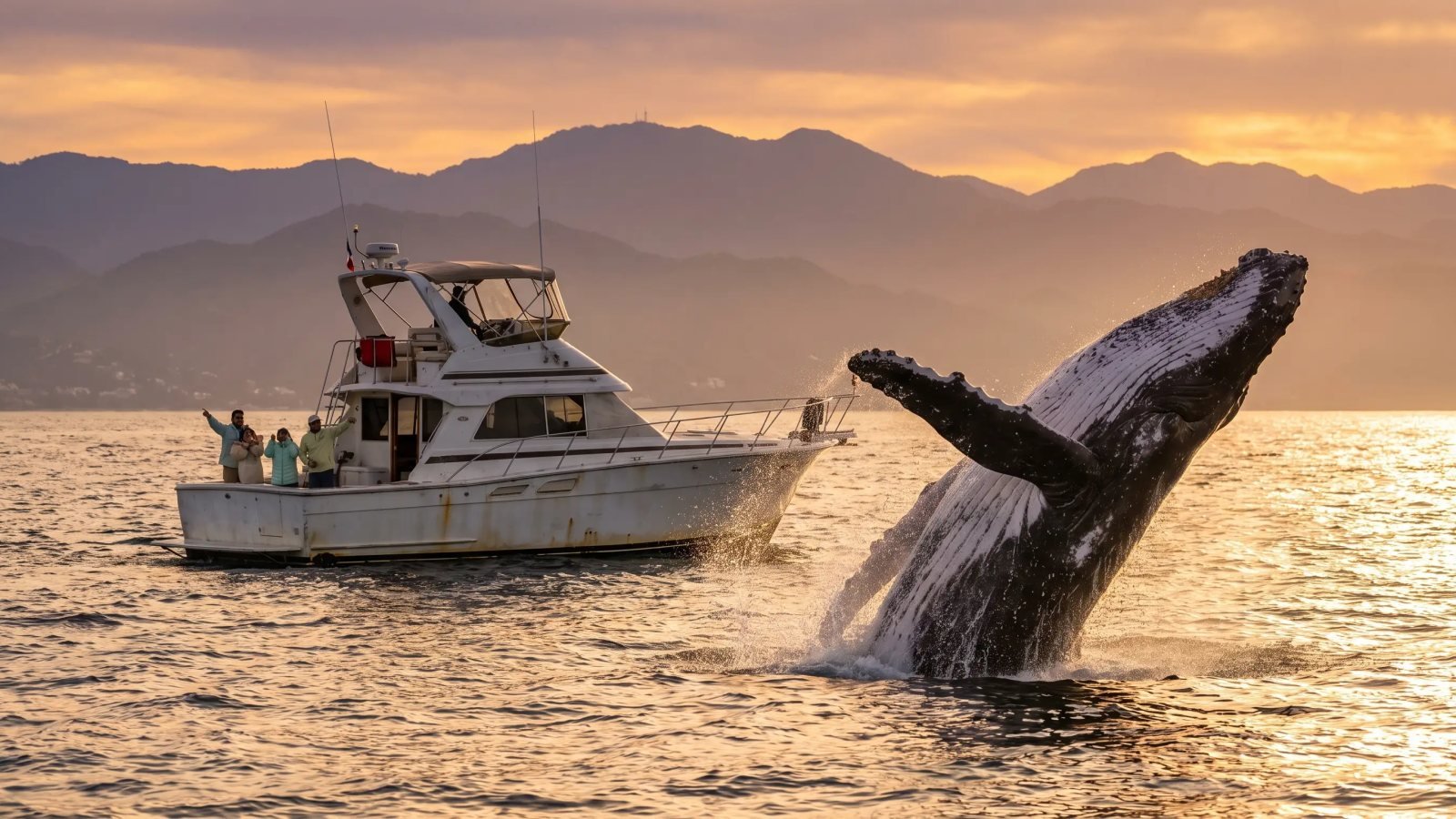
Banderas Bay is one of the more reliable spots on the Pacific coast for humpback whales during their winter migration, and it's a common add-on for guests booking a charter with us. But we don't sell whale watching as its own separate tour — it's something we build into a fishing or beach trip, and it tends to be the highlight of whichever charter it ends up in.
How Our Whale Watching Actually Works
There's no dedicated "whale watching boat" or fixed route. Instead, whale watching gets folded into whatever else you're doing that day. The typical flow looks like this: we're out fishing (or cruising toward a beach) and keeping an eye on the water the whole time. The moment someone spots a whale, we stop what we're doing — fishing lines come in — and just watch. There's no rush; we stay with them until they move on or lose interest, then get back to it: fishing again, or continuing on toward a beach for the rest of the day.
It's a genuinely unscripted part of the trip. Some days you'll see whales close to the marina within the first hour out; other days it takes longer, or you might not see any at all — they're wild animals, not a scheduled stop. What we can promise is that if we do spot them, the rest of the trip pauses to make the most of it.
The Most Popular Combo: Fishing + Whales + Beach
Ask any of our captains and they'll tell you the same thing — the trip most guests end up loving most is the one that combines all three. You head out fishing, watching for whales the entire way. When you find them, everything stops for the whale watching. Once they've moved on, you fish again as you make your way toward a beach, where you spend the last stretch of the charter in the sand. It's not a fixed package — it's just what tends to happen naturally on a longer charter (6-8 hours or more) when guests are open to seeing where the day takes them.
Best Time of Year
Humpback whales generally pass through Banderas Bay during their winter migration, roughly December through March, with sightings typically peaking in the middle of that window. Outside those months, whale sightings become far less likely — if seeing whales is the priority for your trip, book during whale season and treat it as a well-timed bonus on top of a fishing or beach charter rather than a guarantee.
Which Boat Is Best for Whale Watching?
Any boat in the fleet works, since whale watching gets built into whatever charter you've booked rather than requiring a specific boat. A few things worth weighing:
- Peaceful Easy Feeling — nimble and quick, good if you're a smaller group prioritizing fishing with whale watching as a bonus.
- Guanatuna — Raymarine GPS and radar aboard, roomy enough for a mid-size group to comfortably gather on deck when whales show up.
- Steel n Time — the most deck space and highest capacity (up to 22 guests), plus 3 air conditioners and a full salon if you want to be comfortable on a longer combo day.
What Else You Might See Out There
Whales aren't the only wildlife in Banderas Bay. It's common to see pods of dolphins riding the wake alongside the boat, sea turtles surfacing for air, and rays leaping clear of the water. None of these are guaranteed any more than the whales are, but on a longer charter that's actively fishing or cruising, there's a decent chance of seeing at least one kind of marine life along the way — one more reason a longer combo charter tends to be more rewarding than a short, single-purpose trip.
Tips for Whale Watching From a Private Boat
- Let your captain set the distance. They know how to approach whales in a way that's respectful and doesn't disturb them — the goal is to let the whales come to a comfortable distance on their own terms, not to chase them down.
- Bring a real camera or a phone with a good zoom. Breaches and tail slaps happen fast; a longer lens helps you actually capture what you're seeing.
- Be patient. Some of the best sightings happen after the whales have been resting or feeding quietly for a while — the show can start right when you're about to give up.
- Book extra hours if whale watching is your priority. A longer charter simply gives you more time on the water and a better chance of a sighting, plus room to still fish and hit a beach either way.
Frequently Asked Questions
Can I book a whale-watching-only trip?
We don't sell it as a stand-alone package — it's built into a fishing or beach charter. In practice, this works in your favor: you get whale watching plus whatever else you were already planning to do that day.
What time of year should I book for the best chance of seeing whales?
Roughly December through March, when humpback whales migrate through Banderas Bay.
Is whale watching guaranteed?
No — they're wild animals, and sightings vary day to day even in season. What is guaranteed is that if we spot them, we'll stop and give you time to watch.
How close do we get to the whales?
Your captain manages the approach and distance to keep it safe and respectful for both the whales and the boat — we don't chase or crowd them.
Which charter length is best for combining fishing, whales and a beach stop?
6-8 hours is the sweet spot for fitting in all three comfortably, though it can be done in less time if you're willing to trade off some fishing or beach time.